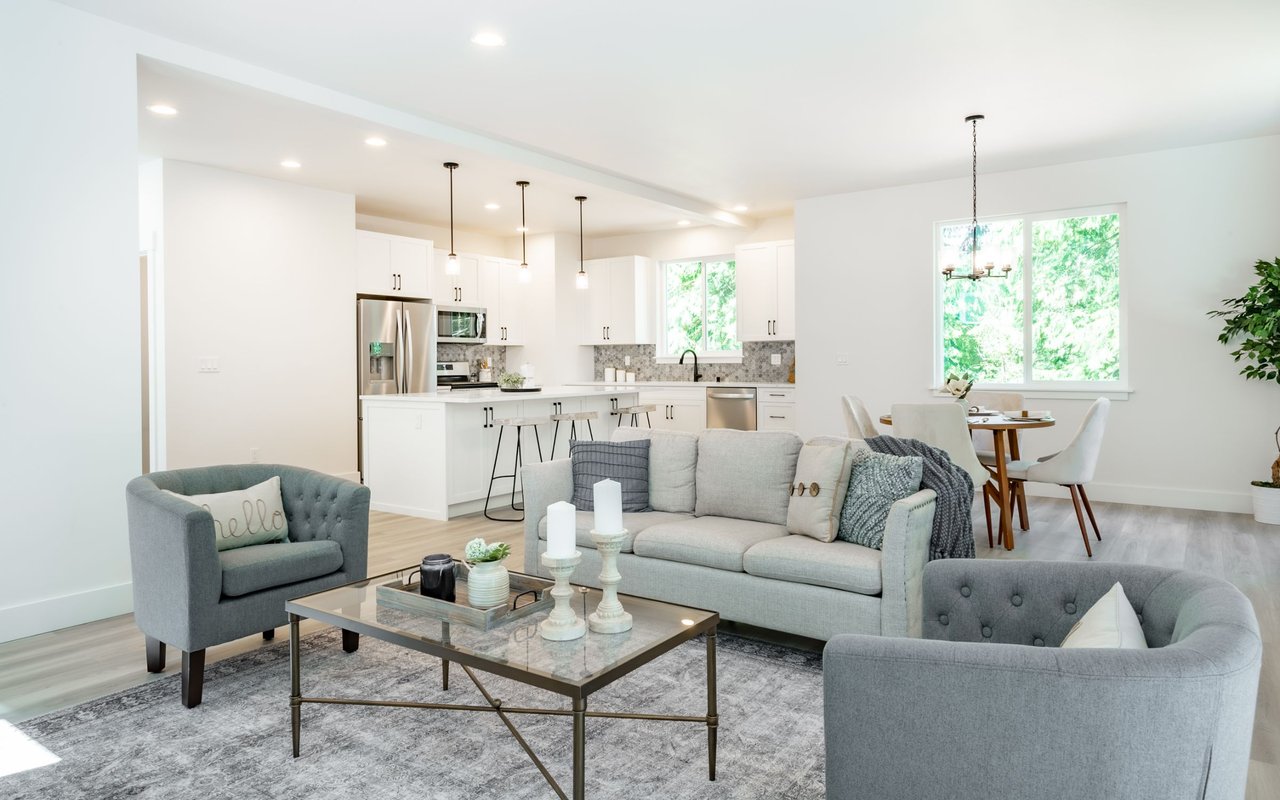
Wondering if your Woodstock home is worth more than it was last year? If you’re thinking about selling, you want a clear number and a smart plan so you can move with confidence. In this guide, you’ll learn how value is set, how to choose the right list price, which prep steps deliver returns, and what the process looks like in Woodstock and Cherokee County. Let’s dive in.
Quick snapshot: reading the Woodstock market now
As of January 2026, your best read on value comes from recent comparable sales in Woodstock and nearby Cherokee County. Focus on these indicators when you review the market with an agent:
- Median sale price and 12‑month trend
- List-to-sale price ratio and price per square foot
- Active listings and months’ supply
- New pendings, closed sales, and median days on market
- Share of homes selling above list price and concession trends
- Mortgage rates and how they affect buyer demand
For the most accurate numbers, rely on the local MLS (FMLS/Georgia MLS). Public portals can be helpful for context, but they can lag or use different rules. Always date your snapshot and ask for an MLS-based Comparative Market Analysis (CMA) tailored to your home’s details.
How home value is determined
Comparative Market Analysis (CMA)
A CMA uses recent, similar closed sales to estimate your value range. It adjusts for condition, lot, upgrades, and size. It’s the most practical, current view of what buyers will pay in Woodstock.
- Pros: Grounded in actual sales and local judgment.
- Cons: Accuracy depends on the agent’s skill and comp selection.
Appraisal
A licensed appraiser reviews comps and may use cost or income approaches where relevant. Lenders rely on these for financing.
- Pros: Thorough and lender-accepted.
- Cons: Reflects the market on the appraisal date and can come in low if sales are shifting.
Automated Valuation Models (AVMs)
Online estimates provide a quick benchmark.
- Pros: Fast and free for a rough check.
- Cons: Can be off by thousands in areas with mixed housing stock, renovations, or limited recent sales. Use as a starting point, not your list price.
Tax-assessed value
County assessments support property taxes, not current market price.
- Pros: Public and stable baseline.
- Cons: Often lags the market and rarely equals what buyers will pay.
DIY valuation: quick checklist
If you want a do-it-yourself starting point before you meet with an agent, follow this:
- Pull 3–6 recent closed sales in your subdivision or within 0.5–1 mile. Favor homes sold in the last 90 days.
- Match square footage within about 10–15 percent and compare bed/bath count and year built.
- Note condition and updates. Adjust your range if a comp has a finished basement, renovated kitchen, larger lot, or view.
- Compare price per square foot, but do not apply it blindly. Use it to sanity-check your range.
- Create a low–mid–high value range and list your assumptions.
- Ask a local agent for a formal MLS-based CMA to confirm and refine your range.
Common pitfalls to avoid:
- Using list prices instead of closed sales for comps.
- Over-relying on AVMs without local adjustments.
- Ignoring condition or function issues like small kitchens or dated baths.
- Not accounting for shifts in buyer demand or mortgage rates.
Picking your price: strategies that work in Woodstock
Your pricing strategy should match your goals for speed, net proceeds, and appraisal risk.
- Market pricing: List at a price supported by recent comps. This attracts serious buyers who write near-list offers in balanced conditions.
- Slightly under market: In a true seller’s market with tight inventory, pricing just below comps can drive traffic and multiple offers.
- Slightly above market: If your home has truly unique or upgraded features, you can list higher and test demand. Expect longer time on market and be ready to adjust.
- Value-add pricing for investors: If you prefer not to handle repairs, price to attract investor interest and simplify negotiations.
Tactics to discuss with your agent:
- First two weeks matter most. The market’s first impression is hard to reset.
- Psychological pricing. Consider search brackets like 399,900 vs. 400,000.
- Offer deadlines and escalation clauses can help in multiple-offer settings.
- Appraisal gap risk. In rising markets, discuss appraisal gap strategies or a pre-list appraisal.
What you will net: simple worksheet
Before you list, sketch your net proceeds so you can make confident decisions.
Estimate:
- Expected sale price based on a CMA
- Mortgage and HELOC payoff amounts
- Seller closing costs: agent commissions (commonly around 5–6 percent in many markets; verify locally), transfer and recording fees, title charges
- Buyer credits or concessions, if any
- Inspection repairs or credits
- Prorated taxes and HOA dues
Your estimated net equals sale price minus the items above. Ask your agent for a personalized net sheet with current local fees and exact payoffs.
Prep that moves the price needle
High-impact, low-cost updates
- Deep clean, declutter, and depersonalize
- Fresh neutral paint where needed
- Carpet and duct cleaning if warranted
- Landscaping and curb appeal tune-up
- Professional photography and a floor plan
Moderate-cost improvements
- Minor kitchen or bath refresh: hardware, regrouting, cabinet refinish
- Replace worn flooring in key areas
- Repair obvious deferred maintenance
- Update lighting and stage priority rooms
Higher-cost, situational projects
- Full kitchen or bath remodels can help, but returns vary by neighborhood and price band
- Roof or HVAC replacement if they are near end-of-life and would become inspection issues
Staging and presentation
Staging helps buyers visualize living in the space and can reduce days on market. Costs vary by level and size of home:
- Partial staging for occupied homes: roughly several hundred to a few thousand dollars
- Full staging for vacant homes: often several thousand dollars and up
Ask your agent to recommend local staging quotes. Strong photos, a clean design narrative, and a floor plan are essential to drive online traffic.
Marketing essentials
- Pro photography, including twilight exteriors when appropriate
- Video or virtual tour and accurate square footage
- Clear MLS remarks that highlight recent updates, commute access, and nearby amenities
- Targeted digital advertising and curated open houses
- On-the-ground signage and directional signs when appropriate
Example cost ranges to budget for (verify locally):
- Professional photos: about $150–$500
- Partial staging: about $500–$3,000; full staging: about $2,000–$10,000+
- Minor repairs/paint: about $500–$5,000 depending on scope
- Optional pre-list inspection: about $300–$600
The sale process: what to expect
A typical timeline looks like this, though your specifics may vary:
- Pre-list preparation: 1–6 weeks
- Go live on MLS and marketing launch: day 0
- Showings and offers: 1–21 days depending on demand
- Negotiation and contract: 1–7 days
- Inspections and repair negotiations: 7–21 days after contract
- Appraisal for financed buyers: scheduled per lender
- Closing: usually 30–45 days from contract, faster for cash
Common scenarios and how to handle them
- Low appraisal: Options include price reduction, buyer bringing cash, appraisal rebuttal with strong comps, or a second appraisal in some cases.
- Multiple offers: Set clear criteria like net, contingencies, and timeline. An offer deadline can help level the field.
- Inspection requests: Decide in advance whether to offer repairs, credits, or a mix. Follow local norms and the current market tone.
- Contingencies: Financing and inspection are common. Sale-of-home contingencies carry more risk; weigh them carefully.
Local factors that influence value in Woodstock
- Commute access: Proximity to I‑575 and routes to Atlanta, Marietta, and Kennesaw affects buyer interest.
- Neighborhood context: Historic Downtown Woodstock, Towne Lake, West Woodstock, and nearby townhome communities each carry different price patterns.
- Amenities: Walkability to Downtown Woodstock shops and restaurants, the Outlet Shoppes at Atlanta, and parks and trails such as the Noonday Creek Trail can boost appeal.
- School district: The Cherokee County School District serves the area. Always confirm current school attendance zones and discuss how buyers factor schools into their search.
- New construction: Ongoing development and lot supply in Cherokee County shape pricing and appraisal benchmarks.
- Local taxes and exemptions: Review assessed value, millage, and homestead exemption options. Check county resources and consult your advisor for specifics.
Ready for a local CMA and strategy?
If you want a clear number and a plan that fits your timeline, request a personalized CMA and net sheet. Our boutique, design-forward approach pairs careful presentation with broad distribution so you capture demand early and negotiate with confidence. Connect with Hollingsworth Company to get your instant home valuation and a step-by-step strategy for your Woodstock sale.
FAQs
What is the difference between assessed value and market value?
- Assessed value supports property taxes and often lags the market. Market value is what a willing buyer would pay today based on recent comparable sales.
How accurate are online home value estimates for Woodstock?
- They are useful as a starting point but can miss unique features or recent renovations; follow up with an MLS-based CMA or a professional appraisal.
Should I renovate before I sell my Woodstock home?
- Focus on high-ROI items like paint, lighting, flooring fixes, and staging; consider major remodels only if they are needed to meet the neighborhood’s price band.
How much will I net after selling in Cherokee County?
- Your net depends on sale price, mortgage payoffs, closing costs, any concessions, and repairs; ask for an agent-prepared net sheet with local fee estimates.
When is the best time to list in Woodstock, GA?
- Spring often brings more buyers, but inventory and interest rates matter; use a current MLS market snapshot to time your launch.
How do I choose the right listing price in Woodstock?
- Start with a recent MLS-based CMA, consider current buyer demand and inventory, then pick a strategy that matches your goals for speed and net proceeds.